


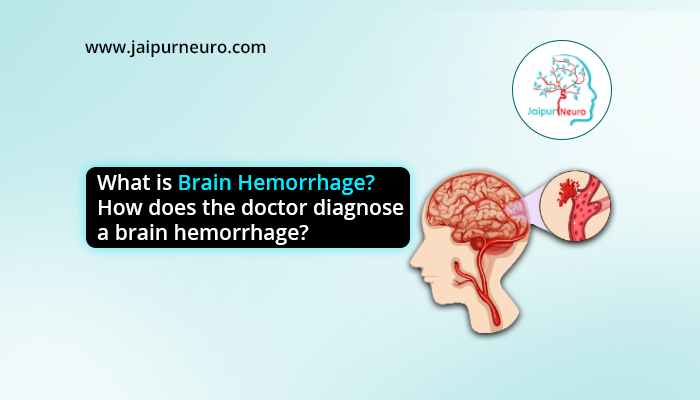
What is Brain Hemorrhage?
A brain hemorrhage is bleeding in or around the brain. It is a type of stroke. Reasons for brain hemorrhage include (hypertension), or dilated (aneurysm) veins that leak, drug misuse, and injury. Numerous individuals who experience a brain hemorrhage have symptoms like they are having a stroke, and can create a weakness on one side of their body, trouble talking, or a feeling of deadness. Trouble performing regular exercises, incorporating issues with strolling, or in any event, falling is normal indications. About 13% of all strokes are hemorrhagic strokes or brought about by bleeding into the brain.
Brain Hemorrhage is frequently named correctly where it happens in the brain. In general, when bleeding is inside all the skull is called a brain hemorrhage. bleeding inside the actual mind is known as an intracerebral hemorrhage. Bleeding can also occur between the covering of the brain and the brain tissue itself, referred to as a brain hemorrhage.
In the event that a blood clot happens between the skull and the brain, it is known as either a subdural or epidural hematoma relying upon whether it is underneath or over the intense covering (dura) of the mind. Subdural and epidural hematomas are bound to happen because of a horrible cerebrum injury or after a fall and won’t be tended to in detail here.
Perceive that when bleeding happens inside the actual brain, a headache may not happen, as our minds don’t can detect the ongoing disturbance. however, the covers of the mind (meninges) are incredibly touchy or sensitive, and if bleeding happens there, as when an aneurysm ruptures, an unexpected and serious migraine is a typical stroke indication.
How do doctors diagnose a brain hemorrhage?
If any sort of stroke is suspected, quick assessment is required. Assessment may prove brain injury with weakness, slurred discourse, and additionally loss of sensations. By and large, a radiology assessment is important, like a registered tomography (CT) check or magnetic resonance imaging (MRI) scan.
The CT or MRI can feature different highlights and areas of brain bleeding. In the event that bleeding within or around the mind is noted, further testing might be requested to attempt to decide the reason for the bleeding. This extra testing can assist with deciding whether unusual veins are available just as the following stage in one or the other diagnosing or treatment. In specific circumstances, a spinal tap (lumbar cut) might be needed to affirm proof of bleeding or rule out other brain problems.
Dr. Vikram Bohra interventional Neurologist in Jaipur provides Brain Hemorrhage Treatment for more than a decade and treat a large number of Hemorrhage Patient.

