

Arteriovenous Malformation Treatment in Jaipur
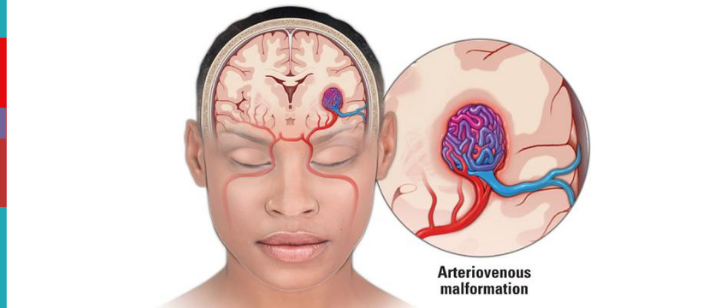
Brain arteriovenous malformation (AVM) is a tangle of abnormal blood vessels connecting the arteries and veins in the brain. Arteries are responsible for carrying oxygenated blood from the heart to the brain. Veins carry deoxygenated blood back to the lungs and heart. A brain AVM disrupts this important process.
An aneurysm can develop anywhere in your body but it occurs most often in the brain or spine. Nevertheless, brain AVMs are rare and affect less than 1 percent of the population.
The reason for AVM is not clear. Most people are born with them, but they can sometimes form later in life. They are rarely passed between families genetically.
Some people with brain AVMs experience signs and symptoms such as headaches or seizures. AVMs are usually found after a brain scan to look for another health problem or because of rupture of blood vessels and bleeding (hemorrhage) in the brain.
Once diagnosed, brain AVMs can often be successfully treated to prevent complications such as brain damage or stroke.
Symptoms of Arteriovenous Malformation
The malformation of a brain aneurysm may not cause any signs or symptoms until the AVM ruptures, resulting in bleeding (hemorrhage) in the brain. In about half of all brain AVMs, bleeding is the first sign.
But some people with cerebral AVMs may experience other signs and symptoms in addition to bleeding related to the AVM.
In people without hemorrhage, signs and symptoms of hallucinations in AVM may include:
- Recovery
- Headache or pain in one area of the head
- Muscle weakness or numbness in one part of the body
Depending on the location of the AVM, some people may experience more severe neurological signs and symptoms, including:
- Severe headache
- Weakness, numbness or paralysis
- Vision loss
- Difficulty speaking
- Confusion or inability to understand others
- Severe instability
Symptoms can start at any age but usually emerge between the ages of 10 and 40. Brain AVMs can damage brain tissue over time. Effects build up slowly and often cause symptoms in early adulthood.
Once you reach middle age, however, brain AVMs remain stable and are less likely to cause symptoms. Changes in blood volume and blood pressure may worsen symptoms for some pregnant women.
A severe type of cerebral AVM, called a vein of Galen defect, causes signs and symptoms that emerge at or shortly after birth. This type of AVM, the major blood vessel involved in the brain, can cause fluid to build up in the brain and cause swelling of the head. Signs and symptoms include swollen veins that appear on the scalp, seizures, failure to thrive, and heart failure.
Causes of Arteriovenous Malformation
The cause of brain AVMs is unknown, but researchers believe that most brain AVMs are released during fetal development.
Normally, your heart sends oxygen-rich blood to your brain through arteries. Arteries slow blood flow through a series of progressively smaller networks of blood vessels, ending with the smallest blood vessels (capillaries). Capillaries gradually deliver oxygen to the surrounding brain tissue through their thin, porous walls.
The oxygen-depleted blood then travels through smaller blood vessels and then into larger veins that take blood out of your brain, returning it to your heart and lungs to receive more oxygen.
Arteries and veins in AVMs lack this supporting network of small blood vessels and capillaries. Instead, the abnormal connection causes blood to flow quickly and directly from your arteries to your veins, bypassing the surrounding tissue.
Risk factors of Arteriovenous Malformation Treatment in Jaipur
Anyone can be born with a brain AVM, but these factors may be a risk:
To be male AVMs are more common in men.
Having a family history Cases of AVM have been reported in families, but it is not clear whether there is a definite genetic factor or if the cases are just coincidence. It is also possible to inherit other medical conditions that predispose you to vascular malformations, such as AVMs.
Diagnosis of Arteriovenous Malformation
To diagnose brain AVM, your neurologist will review your symptoms and perform a physical examination.
Your doctor may order one or more tests to diagnose your condition. Radiologists trained in brain and nervous system imaging (neuroradiologists) usually perform imaging tests.
Tests used to diagnose brain AVM include:
- Cerebral arteriology: Cerebral arteriography, also called cerebral angiography, is the most detailed test used to diagnose AVMs. The test reveals the location and characteristics of the feeding arteries and drainage veins, which is important for planning treatment.
- Computerized tomography (CT) scan: A CT scan uses a series of X-rays to produce a detailed cross-sectional image of your brain. Sometimes a doctor injects dye through an intravenous tube into a vein so that the arteries feeding the AVM and the veins draining the AVM can be seen in more detail (computerized tomography angiogram).
- Magnetic resonance imaging (MRI): MRI uses powerful magnets and radio waves to create detailed images of your brain.
MRI is more sensitive than CT and may show more subtle changes in brain tissue associated with cerebral AVMs.
MRI also provides information about the exact location of the deformity and any associated bleeding in the brain, which is important for determining treatment options.
Your doctor may also apply a dye to your brain to visualize blood circulation (magnetic resonance angiogram).
Treatment
There are several possible treatment options for brain AVMs. The main goal of treatment is to stop the bleeding, but treatment to control seizures or other neurological complications may also be considered.
Your doctor will determine the most appropriate treatment for your condition based on your age, health, and the size and location of the abnormal blood vessels.
Medications may also be used to treat symptoms caused by AVMs, such as headaches or seizures.
So looking for arteriovenous malformation treatment in Jaipur then must book an appointment with Dr. Vikram Bohra is one of the highly experienced Neurologist in Jaipur providing world class brain arteriovenous malformation (AVM) treatment with a hundred percent success rate.
What to expect from your Dr. Vikram Bohra.
Dr. Vikram Bohra may ask about your symptoms, if any, conduct a physical exam and schedule tests to confirm the diagnosis.
The tests collect information about the size and location of the AVM to help guide your treatment options. He may ask:
- When did you first start experiencing symptoms?
- Have your symptoms been frequent or occasional?
- How severe are your symptoms?
- What, if anything, seems to improve your symptoms?
- If anything, seems to worsen your symptoms?
Why Choose Dr. Vikram Bohra for AVM Treatment in Jaipur?
Your Jaipur Neuro Clinic care team will take the time to explain and discuss all of your treatment options. The team will develop a whole-person treatment plan based on the location and size of the AVM, your risk of complications, and your overall health.
At Jaipur Neuro (Neurology Clinic in Jaipur), neurologists specialists work together as a multidisciplinary team to provide specialist, personalized care to each person with brain AVM. This means you’re not just getting an opinion – you benefit from the knowledge and experience of each expert.
Book Appointment
PLEASE FEEL FREE TO CONTACT US
On the other hand we denounce with righteous indignation and dislike men who are so beguiled.
